Home
Archive
5: 2012
Shows
Available from Pirate
Television
Pirate Television is a weekly 58 min Public
Access Television program broadcast in Seattle Washington
USA.
Pirate TV
challenges the Media Blockade by bringing you alternative information
and
independent programming that is unavailable on the Corporate
Sponsor-Ship. The show features talks, interviews and
documentaries.
Some of the material seen on Pirate TV is obtained from other sources
but most
of it is locally produced and owned by us. We are offering to
sell copies
of this material to support the operation. If you would like
to
support
the Pirate Television project you can obtain a
copy of any of these tapes for a $20 donation (includes
postage) in advance.
To
obtain videotapes or DVDs, contact us first by email:
PirateTVSeattle(at)gmail.com
We like to expand Pirate Television to other
broadcast venues. If you would like to get on the Pirate
Television schedule notification list-serve, or if you have
questions, drop us a line.
DVDs of most of the recent Pirate TV shows are available.
This is a list of the material that was produced by us and does not
include all
the fantastic documentaries and other materials that we have
broadcast. Most source tapes are archived and can be accessed by
special request. If you are interested in a complete
list
of the
actual shows for purposes of broadcast on other television stations,
please
contact us. This material is also available in audio form for
broadcast
on the radio.
Programs
are listed in reverse chronological order.
[List
11]
January 2, 2012 to Dec. 17, 2012:
Chuck Collins: How
Wealth Inequality is Wrecking the World and What We Can Do About It,
Mon. 12/17 8-9 pm, Thurs. 1pm, Sat. 1am on SCM
The great grandson of meat
packer Oscar Meyer, Chuck Collins grew up as a
member of the 1%. He is a national expert on
economic inequality, tax policy, corporate power, class privilege and
power as well as a senior scholar at the Institute for Policy
Studies where he directs the Program on Inequality and the Common Good (www.inequality.org)
and co/founder of Wealth for the Common Good
(www.wealthforcommongood.org), a national network of business leaders
and high net worth individuals concerned about shared prosperity and
fair taxation. Chuck Collins is author of 99 to 1: How Wealth
Inequality is Wrecking the World and What We Can Do About
It.
Presented by Real Change
and The Common Good Cafe

Thomas Seeley: Honeybee Democracy,
Mon. 12/10 8-9 pm, Thurs. 1pm, Sat. 1am on SCM
Honeybees make decisions
collectively—and democratically: Every year, their life-or-death
relocation process relies on collective fact-finding, vigorous debate,
and consensus-building. For us humans, of course, the big
debates come every two or four years. Just in time for the latest round
of debate, Cornell biology professor and beekeeper Thomas Seeley,
author of Honeybee Democracy, gave this talk and takes a look
at just what these bees could teach us: collective wisdom and effective
decision-making, the importance of debate, seeking diverse solutions,
and minimizing a leader’s influence.
Thanks to Seattle Town Hall,
University Bookstore and
the Puget Sound Beekeepers Association.
Thomas Frank: Pity the Billionaire,
Mon. 12/3 8-9 pm, Thurs. 1pm, Sat. 1am on SCM
Economic catastrophe usually
sparks social protest and demands for change, but when Thomas Frank,
the great chronicler of American paradox, set out in 2009 to look for
American discontent, he found only wildly unexpected results: The
American Right was strangely reinvigorated by the arrival of hard
times. As a result, Frank, author of Pity the Billionaire, offers a
diagnosis of the cultural malady that has transformed collapse into
profit, reconceived the Founding Fathers as heroes from an Ayn Rand
novel, and enlisted the powerless in a fan club for the prosperous.
Thanks to Seattle Town Hall
and University Bookstore
Dr. Michael Parenti: The 1% Pathology and the Myth of
Capitalism, Mon. 11/25 8-9 pm, Thurs. 1pm, Sat. 1am [SCM]
Dr. Michael Parenti gave this
keynote speech for the 4th Annual People's Movement Assembly at
Evergreen State Collage October 19, 2012. Dr. Parenti is the author of
numerous books and is a charismatic and electrifying speaker. He spoke
about economics, neoliberalism, globalization and the history of
capitalism.
Miko Peled: Beyond
the Zionist Paradigm- New Hope for Israel/Palestine, Sat. 11/17 1am,
Mon. 11/19 8-9 pm, Thurs. 11/22 1pm, Sat. 11/24 1am [SCM]
The
privileged son of a famous Israeli army general and staunch Zionist,
Miko Peled, peace activist and campaigner for Palestinian rights goes
through the history of the state of Israel and systematically
deconstructs the myths of the Zionist state while at the same time
telling the story of his family history and his own personal awakening. Peled is the author of “The
General’s Son: a Journey of an Israeli in Palestine ”.
Thanks to Todd Boyle
for videotaping this event.
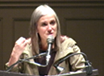
Amy Goodman and Denis
Moynihan: The Silenced Majority Tour, [Web Exclusive]
Amy Goodman and Denis Moynihan
gave this talk in front of a packed Seattle Town Hall on
October 26th as part of their hundred city tour to give expanded
election coverage and pull back the veil of corporate media
reporting. Amy Goodman and Denis Moynihan are co/authors of The
Silenced Majority- Stories of Uprisings, Occupations, Resistance, and
Hope.
Thanks to Seattle Town Hall
and Elliott Bay Books

James Wells with Mayor Mike McGinn: Stop the Coal Trains!,
Monday 11/5/12, Repeats 1pm Thurs. and 1am Sat.
Special 90 minute Broadcast
Monday, 11/5 at 4:30pm
Peabody Energy, the
world’s biggest coal company wants to move millions of tons of
coal from open pit mines in Montana and Wyoming by rail across the
western United States to 5 huge coal terminals it plans to build in
Washington State and from there, ship it to China where it will be
burned- poisoning the ocean and the atmosphere with mercury and other
toxins as well as every community along the way with toxic coal dust.
Thus making certain that if asthma or cancer doesn't get you, climate
change will. If that's not enough, the additional 18 daily 1.5 mile
long, slow moving trains could make your traffic woes go from bad trip
to Nightmare on Elm Street!
These are just some of the
hundreds of impacts you can expect if Peabody Coal and the big money
interests behind them get their way. Luckily, since Peabody and the
banksters are virtually the only ones who think this is a great idea,
people in communities all along the way are rising up and organizing to
stop it.
Pirate TV so happened to be at
one of these organizing meetings. This meeting was on October 29th in
Seattle, held to prepare residents to speak effectively at the upcoming
November 13th Seattle Environmental Impact Hearing- one of 8 to be held
in Washington State. The first coal terminal is proposed to be built at
Cherry Point near Bellingham. The hearing held in Bellingham, October
27th drew 2000 people. Unlimited comments can also be emailed, mailed,
or submitted via the internet. Learn how you can participate by joining
us in what turned out to be a rousing teach-in featuring an
introduction by Seattle Mayor Mike McGinn and conducted by activist
extraordinaire James Wells.
See Also: Coal
Free Seattle
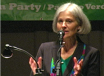
Dr. Jill Stein & Kshama Sawant, Monday 10/29/12, Repeats
1pm Thurs. and 1am Sat.
The
Green Party candidate for President of the United States, Dr. Jill Stein, talks
about climate change, poverty, Medicare for all, getting the money out
of politics, the shredding of the social safety net, legalization of
marijuana, our vanishing civil rights, and more. Joining Stein is
Kshama Sawant, the
Socialist Alternative candidate for the 43rd Legislative District.
Presented by the
Green Party of Washington
State
Recorded at Seattle Town
Hall 10/21/12
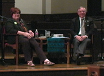
Hans von Sponeck and
Sharon Moe: Responsibility to Protect (R2P) & U.S. Foreign Policy, Monday 10/22/12 8-9pm Repeats 1pm
Thurs. and 1am Sat.
R2P has been the basis for
justifying military actions in Libya — arguing for similar
actions in Syria – and used, after the fact, to justify military
intervention in Iraq. Clearly it’s important to discuss this
issue. A government’s job is to protect its citizens. When it is
unable to do so — or even violates its citizens’ rights
— does the international community have a responsibility to
respond? And in what manner? Hear an informed discussion about
justifications and dangers involved in applying R2P in our world today.
Hans von Sponeck served as a
UN Assistant Secretary-General and UN Humanitarian Coordinator for
Iraq. In 1957 he was one of the first conscientious objectors in the
Federal Republic of Germany.
After Denis Halliday resigned as UN Humanitarian Coordinator for Iraq
in October 1998, von Sponeck took over, heading all UN operations in
Iraq and managing the Iraqi operations of the Oil-for-Food program. Von
Sponeck resigned in February 2000 to protest UN's Iraq sanctions
policy. Von Sponeck accused the sanctions regime of violating the
Geneva Conventions and other international laws and causing the death
of thousands of Iraqis.
Rev. Sharon Moe is the
District Superintendent of the Tacoma District of United Methodist
churches. Rev. Moe has traveled in the Middle East, most
specifically, twice to Iraq with Peace Missions, to Syria with a United
Nations Association mission to research the situation of Iraqi refugees
in Syria, and travels frequently to Israel and the West Bank. She lived
for a short time in Israel at the West Bank wall outside Bethlehem.
Rev. Moe continues to work with a cross cultural camping program for
Palestinian Christian children and young adults.
Sponsored by: Washington
Physicians for Social Responsibility; Greater Seattle United Nations
Association; Western Washington Fellowship of Reconciliation; Seattle
Fellowship of Reconciliation; University Temple United Methodist
Church; American Friends Service Committee, West Region; Phinney
Neighbors for Peace and Justice; Interfaith Network of Concern for the
People of Iraq.
Recorded at University
Temple United Methodist Church 10/10/12
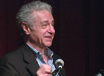
Gar Alperovitz - America Beyond Capitalism, Monday 10/15/12 8-9pm Repeats 1pm
Thurs. and 1am Sat.
Activist and economist Gar Alperovitz offers a diagnosis of what ails
America, and prescribes what Noam Chomsky calls “concrete and
feasible” solutions. Alperovitz’s emerging “new
economy” strategies propose locally-based, bottom-up efforts that
democratize wealth and empower communities—changing a faltering
system that, says Alperovitz, increasingly fails to sustain the great
American values of equality, liberty, and meaningful democracy.
Thanks to Seattle Town Hall
and Elliott Bay Books
Greg Palast - How Billionaires Steal
Elections, Monday
10/8/12 8-9pm Repeats 1pm
Thurs. and 1am Sat.
Greg Palast talks about his book
Billionaires and Ballot Bandits, where he teams with fiery editorial
cartoonist Ted Rall to name and shame the billionaires
buying up our democracy, and the disenfranchisement of millions through
voter-ID laws, list purges, and other assaults to our civil rights.
See: www.BallotBandits.org
Thanks to Seattle Town Hall
and Elliott Bay Books
Cameras by Ed Mays, Mike McCormick & J Glenn Evans
David Domke & Christopher Parker:
Obama, the Tea Party, and Racism, Monday 10/1/12 8-9pm Repeats
1pm Thurs. and 1am Sat.
David Domke, Chair of the University of Washington Department of
Communications and a winner of the school’s Distinguished
Teaching Award, believes President Barack Obama has been subjected to
historically unprecedented disrespect by legislators and many citizens.
Is this evidence of racism toward our first African-American president?
What role has the Tea Party played in this animosity? What does
public-opinion data tell us; what do we learn from public rhetoric; and
what does news coverage suggest? Speaking to the data, UW Professor of
Social Justice and Political Science and author of the forthcoming book
Change They Can’t Believe In, Christopher Parker joins Dr. Domke
in a candid, evidence-based conversation around this explosive topic.
Thanks to Seattle Town Hall and Elliott Bay Books
Tom Carpenter: Hanford Cleanup-
Progress and Challenges,
Monday 9/24/12 8-9pm Repeats
1pm Thurs.
and 1am Sat.
Tom Carpenter is the Executive
Director of Hanford Challenge (http://www.hanfordchallenge.org),
whose purpose is to transform the Hanford nuclear site into a model of
safe and effective cleanup. Hanford Challenge works closely with
insiders and whistleblowers at Hanford, and keeps on top of
developments there daily.
Tom discusses the present state
of Hanford cleanup, where things are changing for the better, and where
we are still stuck in old and not-so-useful patterns. He has
spent decades as an attorney representing whistleblowers at Hanford and
other nuclear sites and has authored numerous articles and reports on
nuclear risks, and worked to change public policy. On August 17,
Tom publicly revealed that a double-walled tank at Hanford is leaking a
large, solid mass.
In this talk he educates and
engages us in efforts to support whistleblowers and protect others
working to clean up Hanford and nuclear threats to the environment
and public health. Tom also helps us grapple with how the
meltdowns at Fukushima are affecting our region, and explores our
options for reducing current and future nuclear risks
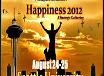
Conference on National Happiness, Monday
9/24/12 8-9pm Repeats 1pm Thurs. and 1am Sat.
The National Happiness Summit explores the connection between happy
people, healthy cities and a sustainable world. This program includes
talks by
John de Graaf, Executive
Director of Take Back Your Time and co-author of Affluenza and What's
the Economy for, Anyway?,
Ryan Howell, creator of the
Happiness Initiative national survey,
Robert Costanza, prominent
ecological economist,
Eric Weiner, former NPR
reporter and author of the best-seller, The
Geography of Bliss, a story of his search for the world’s
happiest
countries,
Tom Barefoot, founder of GNHUSA
was active in bringing the Genuine
Progress Indicator to the attention of the Vermont legislature and,
Connie Moffit, worked in
nonprofit management in the US and Canada for
20 years, including People for Puget Sound and Seeds of Compassion in
Seattle.
This longer version contains the complete talk by Eric Weiner and talks
by Tom Barefoot and Connie Moffit that were not included in the
broadcast version.
Recorded at Seattle University, Aug 24-25, 2012 by Todd Boyle

Arun
Gupta: Is This What Democracy Looks Like? Monday 9/3/12 8-9pm Repeats 1pm
Thurs. and 1am Sat.
Occupy Wall Street has been one of the most powerful
social movements in recent U.S. history. Among the many reasons for its
popular success is that it is at heart a democracy movement. What made
it different is that Occupy tied economic democracy to political
democracy.
The
movement, with its slogan of “We are the 99%,” and the
popular phrase “The 1%,” forced the political establishment
and mainstream media to finally acknowledge that the concentration of
monetary wealth inevitably leads to concentration of political power.
Ironically,
President Obama, whose signature accomplishment has been to shield the
banks and wealthy from criminal prosecution and higher taxes, has
swiped Occupy Wall Street’s language for his re-election
campaign. Obama, organized labor and MoveOn are painting
Romney as “Mr. 1%,” and Obama as defender of the 99%. At
the same time, Obama’s FBI is waging war on radicals in the
Occupy movement, raiding the homes of activists while entrapping others
in fabricated terrorism plots.
So
how did Occupy go from a remarkably powerful outburst of anger against
the political and economic system to fragmentation and co-optation?
This is not imply Occupy is over, but it has receded back into the pool
of social discontent from which it sprang, while the social conditions
that gave rise to it are only getting worse.
In
this talk, Arun Gupta will look at what made Occupy
such a phenomenal success last year, why much of it disintegrated, how
the Democratic Party co-opted its language, and what is its legacy,
including the various movements that have sprung from it or which have
been significantly influenced by it.
Arun
Gupta is co-founder of The Indypendent and
The Occupied Wall Street Journal, and former international news editor
of The Guardian Newsweekly. He has visited more
than 40 occupations in 27 states covering the Occupy Wall Street
movement nationwide for The Guardian, Al Jazeera, Salon, Truthout,
The Progressive, The Nation, and other publications. Since the fall of
2011 Gupta has helped set up Occupy newspapers in cities including
Chicago and Tucson. He has been profiled by media including Business
Week, PBS, Wired and The New York Times. He is a recipient of a Wallace
Global Fund grant for his media work, and is a Lannan
writing fellow. Gupta is a regular commentator on Democracy Now!, the
Canadian Broadcasting Corporation, Al Jazeera and Russian
Television. He is writing a book on the decline of American Empire for Haymarket
Books.
Faith Communities and Mass Incarceration panel, Monday 8/27/12
8-9pm Repeats 1pm
Thurs. and 1am Sat.
The U. S. not only has the highest rate of
imprisonment in the world (715 per 100,000 people), but more people in
prison that any other country in the world (2,019,234). In fact, even
though America only has 5% of the world's population, it has 25% of
world's incarcerated population. Prison overcrowding is a continuing
problem, and states are building more and more facilities to house
inmates.
Also
troubling is racial disparity in enforcement. More than 60% of the
individuals in prison are people of color. In Washington, even though
only 3.6% of the population is African-American, blacks make up 11.5%
of all drug arrests. The primary means driving incarceration was, and
is, the War on Drugs.
In
1970, there were less than 200,000 people in prison. In 1971, the
federal government enacted the Controlled Substances Act which made
possession, sale, and manufacture of all drugs a crime. The current
prison population is more than ten times what it was in 1970.
This
panel examines the devastating effect this has had on communities of
color and explores some of the real reasons behind the exponential
expansion of mass incarceration and as well as offers ways to put a
stop to it. One excellent way is to help pass Initiative 502 to
legalize the possession of marijuana for adults age 21 and older in
Washington State.
Participants:
SpearIt-
assistant law professor at St. Louis University
Pastor Carl Livingston- founder of Kingdom Christian Center
Reverend Paul Benz- Co-Director of Faith Action Network
Moderator- Michael Ramos, Executive Director of the Church
Council of Greater Seattle
Sponsored
by the ACLU-WA, the Church Council of Greater Seattle, Faith Action
Network, and the Latino Community Fund
Video
by Todd Boyle
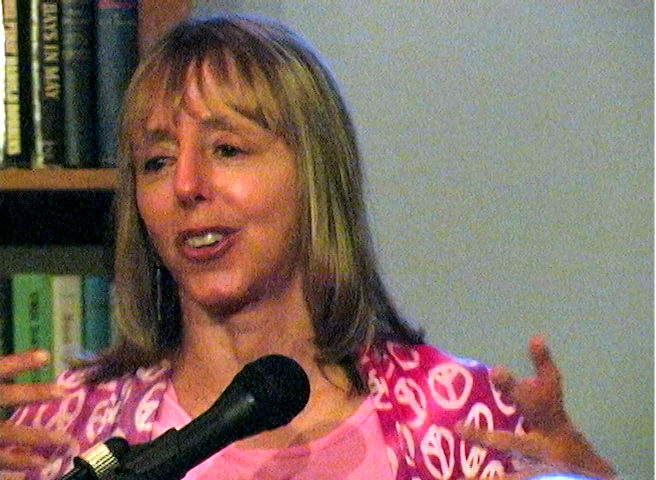
Medea Benjamin: Drone
Warfare: Killing By Remote Control, Monday 8/13/12 8-9pm Repeats
1pm Thurs. and 1am Sat.
Medea Benjamin, co-founder of Code Pink and Global Exchange and one of
the country's pre-eminent activists examines the horrific implications
of the high-tech murder, extra judicial execution, and spying by
aerial drones currently being carried out by the US national security
state and proliferating to a city near you. Seattle is one of 30
"test cities" already deploying remote controlled aerial drones.
These drones range from the size of a mosquito to a medium size
airplane and have provoked international citizen opposition as well as
a new arms race. In this talk, we take a close look at the
situation and consider what to do about it. The title of Medea's
new book is: Drone Warfare: Killing By Remote Control.
Thanks to Elliott Bay Books

War on Drugs: War on Communities of Color, Monday 8/6/12
8-9pm Repeats 1pm
Thurs. and 1am Sat.
Drug use crosses race lines, but people of color are more
often arrested, prosecuted, and jailed in the War on Drugs –
replacing Jim Crow Laws with criminal records and undermining our
communities. Join us for a public forum exploring America’s
addiction to incarceration and strategies for how to break it.
Panelists:
Alice Huffman:
President, California NAACP
Major Neill Franklin:
Maryland State Police (ret.), Executive of Law Enforcement
Against Prohibition (LEAP)
Pastor Carl
Livingston: Professor of Political Science at
Seattle Central Community College (SCCC), attorney
and community activist, Founder of the Kingdom Christian Center.
Hosted by James Bible:
President, Seattle King County NAACP
Event sponsored by the
NAACP, ACLU of Washington, and Law Enforcement Against Prohibition
(LEAP)
Recorded at Southside
Commons in Seattle, Nov. 29, 2011
Dennis Bernstein: Special Ed, Monday 7/23/12 8-9pm Repeats 1pm
Wed
Poet and educator Dennis J. Bernstein will read from his
new collection of poems, Special Ed: Voices from a Hidden Classroom.
These poems are about
the kids who were Bernstein's students when he taught in the New York
City public schools, before embarking on a career as an internationally
known investigative journalist.
Bernstein, a long-time
social justice advocate, is currently the producer and co-host of the
news program, Flashpoints, KPFA
Pacifica
Radio.
Following the reading,
Dennis is interviewed by Ed Mays and Mike McCormick on his role in
exposing the Iran/Contra war crimes/drug running scandal, his role
in the historic battle to save the Pacifica Radio
Network in early 2000, and the current situation in the
Israel/Palestine.
Chris Hedges:
Days of Destruction, Days of Revolt, Monday 7/23/12 8-9pm Repeats 1pm
Wed
As the nation’s poorest city per capita, Camden,
N.J., is a poster child of postindustrial decay—and a warning to
us all, says Chris Hedges. The Pulitzer Prize-winning journalist,
co-author of the graphic nonfiction book Days of Destruction, Days
of Revolt, traveled to the most depressed areas of the United
States to show what happens when a society loses a sense of the
sacred and nothing has an intrinsic value beyond monetary values.
Amid sky-high
unemployment and threatened social services, Hedges warns of a bleak
near-future where cities such as Camden—and even
states—fall into bankruptcy, neofeudalism reigns, and the
nation’s working and middle classes are decimated.
Thanks to Seattle Town
Hall and University Book Store
Camera by Mike McCormick
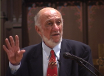
Richard
Falk: The Economic, Legal and Moral Costs of War: A Forum on
Israel-Palestine, and the United States,
Monday 7/16/12 8-9pm Repeats
1pm Wed
Richard Falk, Prof. Emeritus of International Law
Princeton University, and U.N. Human Rights Rapporteur
to the Palestinian Occupied Territories assesses the Israel Palestine
conflict on U.S.S. Liberty Day June 8, 2012.
"I think if we want to
live on this planet successfully we have to more and more think as
humans not as Americans, not as Jews or Christians or Muslims. We have
to retain the pride of those identities, but they have to be part of a
human experience, and the more that we allow ourselves to be human, the
more likely we are to take suffering seriously. And when we take
suffering seriously, we become inevitably committed to the struggle for
justice."
Recorded at University Temple United Methodist Church in Seattle, WA.
Video by Todd Boyle
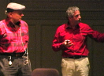
John
Marzluff & Tony Angell: Gifts of the Crow, Monday 7/9/12 8-9pm Repeats 1pm
Wed
New research finds that crows are among the
brightest animals in the world—and John Marzluff and Tony Angell
say they’re also quite surprising. Marzluff, Professor of
Wildlife Science in the UW’s School of Environmental and Forest
Sciences, and artist/naturalist Angell, co-authors of Gifts of the
Crow, marvel at the birds’ behavior: They play, take risks,
reward people who help (or feed) them, use cars as nutcrackers, seek
revenge on harassing animals, and dream—all things we humans
might find strangely familiar.
Thanks to Seattle
Town Hall and University Book Store
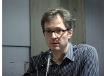
Ted Rall: The Book of Obama,
Monday 7/2/12 8-9pm Repeats
1pm Wed
Pulitzer Prize-finalist, cartoonist,
independent war journalist, and polemicist Ted Rall
returns to Seattle as part of a tour for his new book, The Book of
Obama: How We Got from Hope and Change to the Age of Revolt (Seven
Stories Press). Here, Ted Rall revisits what he sees as the rapid
rise and dizzying fall of Barack Obama as president—and the
emergence of the Tea Party and Occupy movements—and draws quite
the conclusion: "We the People weren't lied to. We lied to ourselves,
both about Obama and the two-party system."
Ted Rall is the author of
sixteen books, including The Anti-American Manifesto and To Afghanistan
and Back: A Graphic Travelogue.
Thanks to Elliott Bay Books
Video by Todd Boyle
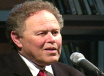
Avner Cohen: Israel, Iran, & The Rivalry Over
the Bomb, Monday 6/25/12 8-9pm Repeats 1pm
Wed
As the only nuclear-armed state that
doesn’t acknowledge its possession of the bomb, Israel has
created a special “bargain,” says Avner
Cohen. Now, the rise of nuclear Iran, says the author of The Worst-Kept
Secret, may threaten the subtle nuclear equilibrium that has dominated
the Middle East in recent decades. Israel is now facing a unique and
fateful dilemma, a challenge larger than any Israel has ever dealt with
in the past. Cohen calls this “one of the most critical
international issues of our day” and offers an appraisal of the
dilemma.
Thanks to Seattle Town
Hall and Elliott Bay Books
Chris Mooney: The Republican Brain, Monday 6/11/12 8-9pm Repeats 1pm
Wed
Baffled about how that hard
core right wing conservative in your
life can't seem to accept the reality of
everything from climate change to evolution to
corporate rule? Ever notice how with people of this
ilk, facts don't matter and what's worse, the more
proof you give them the more it seems shore up
their delusional belief systems?
We like to think that they
are just the victims of Fox
News and religious
and ideological indoctrination. We fanaticize
that if we could only somehow get them
to a professional deprogrammer, they would
finally get a grip and join us
progressives as part of the solution instead of the
problem.
Maybe we should stop
wasting our time. A growing body of
evidence illustrates that this may be delusional
thinking on our part and science writer Chris Mooney explains
why. Dissecting the psychology behind Republicans’
refusal to accept things that most experts agree on, Mooney, author of The Republican War on Science and
the his latest The
Republican Brain, discovers that conservatives and liberals
don’t just have different ideologies; they are in fact wired
differently. Join us for an
illuminating and myth
defying journey into the science of the
Republican Brain.
Thanks to Seattle Town Hall and
University Book Store
Mike Lapham and Brian Miller: The Self-Made Myth, Monday 6/4/12 8-9pm Repeats 1pm
Wed
What we believe about how
businesses succeed and how wealth is created has a powerful impact on
the public-policy choices we make (including how we tax upper-income
people). UFE’s new book, The Self-Made Myth: And the
Truth About How Government Helps Individuals, exposes the reality
that any enterprise is the result of a variety of factors, including
government support: No one in this country ever “made it”
alone.
Co-authors Mike Lapham and
Brian Miller jump-start the conversation surrounding the
“self-made” myth and its impact on our political climate;
joining them is guest speaker Bill Gates Sr., who wrote the
book’s foreword—a particularly successful upper-income
person who also didn’t make it on his own.
Presented by United for a Fair
Economy.
LEARN MORE: www.Faireconomy.org
Flash Video (:58)
Rocky Anderson:
Standing Up for Justice, Monday 5/28/12 8-9pm Repeats 1pm
Wed
The two-party system has given
us endless wars, bank bailouts and tax-breaks for the rich. Rocky
Anderson, former two-term, progressive Mayor of Salt Lake City, has a
proven track record on human rights, environmental stewardship, and
justice for the 99%. Rocky left the Democratic Party to build a third
party alternative and is now running as a 2012 Candidate for President
with the Justice Party. Hear him speak out on corporate
corruption, cost of war and the 2012 election.
Website for more info:
http://www.voterocky.org/
Contact Email:
justiceparty.washington.state@gmail.com

Tim Noah: The
Great Divergence,
Monday 5/21/12 8-9pm Repeats
1pm Wed
For the past
three decades, America has steadily become a nation of haves and
have-nots, with the top 1% collecting some 21 percent of the
nation’s income. Tim Noah, author of The Great Divergence
(based on his award-winning series of articles in Slate), calls
this potentially the country’s most important change during our
lifetimes; he explains how it happened, the threats it poses, and how
we can begin to reverse it.
Thanks to Seattle Town Hall
and Elliott Bay Books
Bruce
Gagnon: The Deadly Connection: Endless War and Economic Crisis, Monday
5/7/12 8-9pm Repeats 1pm
Wed
Having just returned from
demonstrations in South Korea protesting the construction of a huge US
Navy base on Jeju Island, Bruce Gagnon will speak on U.S. expanding
militarism, as well as the impact of militarism on the economic crisis
here at home; and the need to promote the conversion of the military
industrial complex to sustainable production if we hope to have the
slightest impact on climate change. These and similar issues are
contained in his book Come Together Right Now: Organizing Stories from
a Fading Empire. Bruce Gagnon is Coordinator of the Global
Network
Against Weapons & Nuclear Power in Space, and Long-time Member of
Veterans For Peace
Dr. Zoltan
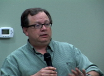
Grossman: New U.S. Military Bases: Side Effects or Causes of War?, Monday 4/30/12 8-9pm Repeats 1pm
Wed.
After every U.S. military intervention since 1990, the Pentagon has
left behind clusters of new bases in areas where it never before had a
foothold. The new string of bases stretch from Kosovo and other Balkan
states, to Iraq and other Persian Gulf states, into Afghanistan and
other Central Asian states - forming a new U.S. sphere of influence in
the strategic 'middle ground' between the EU and East Asia.
Dr. Zoltan Grossman has taught Geography and Indigenous Studies for
seven years at The Evergreen State College in Olympia, and is a
longtime peace and justice organizer from Wisconsin. He is a civilian
member of the board of directors for GI Voice / Coffee Strong, a
co-founder of FOR's Militarism Watch project, and a frequent
contributor to Counterpunch, Z, CommonDreams, and other publications.
Video by Todd Boyle
Michael
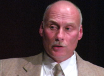
Huesemann: Techno-Fix: Why
Technology Won’t Save Us Or the Environment, Monday
4/23/12 8-9pm Repeats
1pm Wed.
You might not want to pin your
hopes on nanotechnology, genetic engineering, or miracle drugs, says
Michael Huesemann, author of Techno-Fix: Why Technology Won’t
Save Us Or the Environment. As much as we’d like to believe that
technological innovation will let us magically continue our lifestyle
and prevent social, economic, and environmental collapse, Huesemann
shows that most technological solutions are ineffective—and, in
the presence of continued economic growth, modern technology does not
promote sustainability, but hastens collapse.
Thanks to Seattle Town
Hall and Elliott Bay Books
Flash Video
Norm
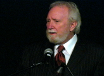
Stamper: Safe and Just Policing, Monday 4/16/12 8-9pm Repeats 1pm
Wed.
Former Seattle Chief of Police Norm Stamper leads an ACLU of
Washington forum subtitled, “Toward a Police Culture Beyond the
War on Drugs.” A police officer for 34 years and chief of the
Seattle Police Department from 1994-2000, Stamper is an advocate of
fundamental reforms in policing, saying the wars on terror and drugs
have spurred a regrettable “militarization” of police work.
ACLU-WA executive director Kathleen Taylor says, “Stamper’s
experiences have led him to valuable insights about curtailing police
abuse and improving police-community relations”—especially
relevant in the wake of the recent Department of Justice report on
Seattle police …
Norm Stamper is author of
"Breaking Rank: A Top Cop’s Street-Smart Approach to Making
America a Safe Place For Everyone"
Presented by the ACLU of
Washington
Flash Video
Dr. Helen
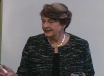
Caldicott: What We Learned From Fukushima, Monday 4/9/12 8-9pm Repeats 1pm
Wed.
Few people
know that the Pacific Northwest got whacked hard by fallout from the
Fukushima disaster with radiation rates
hundreds of thousands of times higher than normal background
radiation. The damage from this is not something that the
corporate media or the government is talking about. It
mysteriously disappeared from the radar almost immediately. Dr.
Caldicott referred to this as a process of “cover-up and psychic
numbing.” Looks like it may be working. The Nuclear
Regulatory Commission just approved two new nuclear power plants this
week (4/2/12) in South Carolina in addition to the two approved earlier
this year in Georgia.
Dr. Caldicott
talks about the dangers and hidden costs of nuclear power then tells
the awful truth in minute detail about the actual scale of the
Fukushima disaster and compares it to the nuclear disasters of
Chernobyl and Three Mile Island. Recent studies estimated that a
million people have died so far from Chernobyl.
Dr. Helen
Caldicott is a physician, Nobel Peace Prize winner, noted author,
anti-nuclear power advocate and has founded numerous national and
international groups which oppose nuclear power & weapons,
including Physicians for Social Responsibility.
See also: www.helencaldicott.com

Flash Video
Andrew Ross:
Phoenix: Lessons from the World’s Least Sustainable City, Monday 4/2/12 8-9pm Repeats 1pm
Wed.
Andrew Ross (Professor of
Social and Cultural Analysis at NYU, and a Nation contributor) examines
Phoenix, AZ, one of the fastest growing and least sustainable
metropolitan regions: a city in the bull’s eye of global warming.
Ross contends that if we can’t change the game in fast-growing,
low-density cities like Phoenix, the whole movement has a major
problem, and argues that solutions will come through political and
social change rather than technological fixes. Ross is Author of "Bird
on Fire".
Thanks to Seattle Town Hall
and Elliott Bay Book Company
Flash Video
Peggy Orenstein: A
New Generation of Girlie-Girls, Monday 3/19/12 8-9pm Repeats 1pm
Wed.
Peggy Orenstein’s 2006 essay "What’s Wrong with
Cinderella?" sparked a firestorm; now she digs more deeply into our
growing girlie-girl culture. Facing down her own confusion as a mother
raising a girl, journalist Orenstein, author of the bestseller
"Schoolgirls" and "Cinderella Ate My Daughter", examines the
seemingly-retro trend toward the ultra-feminine, from Disney princesses
to the color pink; the role the ubiquitous marketing machine plays in
packaging and promoting it; and what it could mean for our
daughters’ identities and futures.
Thanks to Seattle Town Hall and University Bookstore
Flash Video
Jeff Clements:
Corporations Are Not People, Monday 3/19/12 8-9pm Repeats 1pm
Wed.
Jeff Clements, Author and Free Speech For People Co-Founder, talks
about his new book, "Corporations Are Not People" which tells the true
story of how some of the largest corporations in the world organized to
take over our government and Constitution, culminating in 2010 with the
5-4 Supreme Court decision, Citizens United v. Federal Election
Commission. Clements, a lawyer and legal scholar served as Assistant
Attorney General and Chief of the Public Protection & Advocacy
Bureau in the Massachusetts Attorney General’s Office from early
2007 to 2009. In this talk he discusses the little known history of how
corporatist Supreme Courts overstepped during previous periods of
corporate rule in US history leading to uprisings by the people forcing
constitutional amendments much like the current struggle to overturn
Citizens United.
After Jeff's talk there was a discussion moderated by Enrique Cerna,
co-creator, host, and executive producer of the weekly current affairs
program "KCTS 9 Connects". He is a five time Northwest Regional Emmy
Award winner with more than 36 years of experience in the Seattle
broadcast market.
Flash Video
John Nichols: How
Wisconsin Renewed the Politics of Protest,
Monday 3/12/12 8-9pm Repeats 1pm
Wed.
On the anniversary of the
Wisconsin protests, journalist John Nichols describes how they led to
the biggest labor rallies since the 1930s. In February 2011, Wisconsin
governor Scott Walker moved to strip collective-bargaining rights from
public-sector workers; now Nichols, author of Uprising, discusses how
conservatives are trying to revoke unionizing rights nationwide in an
assault coordinated by privatizers and billionaire political
donors—and how ordinary people are fighting back.
Thanks
to Seattle Town Hall and University Bookstore
Flash Video
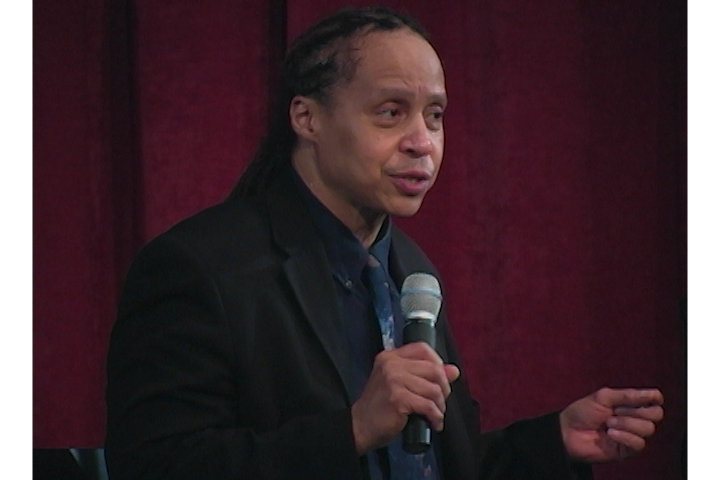
Jamal
Joseph: Coming of Age in the Black Panther Movement,
Monday 3/5/12 8-9pm Repeats
1pm Wed.
In the 1960s, Jamal
Joseph exhorted students at Columbia to burn down their
college; today he’s chair of its School of the Arts film
division. Joseph, author of Panther Baby, chronicles his personal
odyssey, from high-school honor student Eddie Joseph to his
introduction to (and eventual leadership of) the Black Panther Party,
to sentences at Riker’s Island and Leavenworth, and to the halls
of Columbia, illuminating the life of a soldier inside the militant
movement— and a life of rebellion and reinvention.
Thanks to Seattle Town Hall and University Book Store

Flash Video
Kim Ives: Politics
and Disaster: The U.S. in Haiti, Monday 2/27/12 8-9pm Repeats 1pm
Wed.
Two years after the Haiti
earthquake, Kim Ives offers an exposé of diplomatic cables that
reveal U.S. government policies and practices there. Ives, founder of
the weekly newspaper Haiti Liberté and a commentator for
Democracy Now!, has analyzed internal documents from 2003-10 released
by the U.S. Embassy in Haiti and provided to Liberté and The
Nation by WikiLeaks—documents that explain the government’s
role in the coup against former Haitian President Jean-Bertrand
Aristide, and its plans to profit from disaster.
Thanks to Seattle Town Hall

Rebecca MacKinnon: The Struggle for Internet Freedom,
Monday 2/20/12 8-9pm Repeats
1pm Wed.
For all the overheated
rhetoric of liberty and cyber-utopia, says Internet policy specialist
Rebecca MacKinnon, it’s clear that the corporations that rule
cyberspace are making decisions that show little or no concern for
their impact on political freedom. MacKinnon, author of Consent of the
Networked, argues that it’s time for us to demand that our rights
and freedoms are respected and protected before they’re sold,
legislated, programmed, and engineered away. Ultimately, she says, the
purpose of technology, and of the corporations that make it, is to
serve humanity—not the other way around.
Thanks to Seattle Town Hall
and University Book Store

Capt. Charles Moore: Saving Our Oceans from Plastic, Monday
2/13/12 8-9pm Repeats 1pm
Wed.
Like a synthetic siren, The
Great Pacific Garbage Patch drew Charles Moore to science; now his
research raises deep questions about plastic. Moore, author of Plastic
Oceans, first encountered the 2-million-square-mile floating
landfill by chance in 1997, as skipper of a catamaran. He returned
repeatedly to cull scientific samples, finding that the plastic in his
nets outweighed zooplankton by a factor of 6-to-1—prompting not
only a global reassessment of plastics’ invasiveness, but also a
personal quest to achieve his own scientific credibility—and to
save our oceans.
Thanks to Seattle Town Hall and University Bookstore
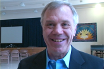
Jim Diers:
Building Healthy Communities, Monday 2/6/12 8-9pm Repeats 1pm
Wed.
There is no substitute for community when it comes to preventing crime,
responding to disasters, enhancing our health and happiness, caring for
one another and our planet, creating a vibrant democracy, and advancing
social justice. Strong communities are needed now more than ever due to
the current economic and environmental crises. Yet, our communities and
our democracy have also been in decline for some time. Government,
non-profits and other institutions that are seeking to help are
inadvertently contributing to that decline.
Based on his 35 years of
community work in Seattle, Jim Diers shares lessons for building broad
and inclusive community participation. He emphasize the power of
focusing on the strengths rather than the needs of individuals and
their neighborhoods. Jim shares stories of hope from his international
travels to illustrate what is possible when individuals and
institutions rediscover the power of community.
Jim’s book, Neighbor
Power: Building Community the Seattle Way, is available in both
English and Chinese editions.
Thanks to Plymouth Church, Seattle
Washington
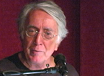
Special 90min broadcast: David Barsamian:
Uprisings: From Kashmir to Egypt to Wall Street. Monday 1/30/12 7:30-9pm Repeats
1pm
Wed.
One of America’s most
wide-ranging investigative journalists, David Barsamian has altered the
independent media landscape with his weekly radio show Alternative
Radio—now in its 25th year and heard locally on KUOW, KEXP,
and KSER—and with his books, written with Howard Zinn (The
Future of History), Arundhati Roy (The Checkbook and the
Cruise Missile), Edward Said (Culture and Resistance) and
Noam Chomsky (the new How the World Works). Barsamian, who
recently was deported from India due to his work on Kashmir and other
revolts, discusses world affairs, the state of journalism, censorship,
the economic crisis, and global rebellions.
Thanks to Seattle Town Hall and
Elliott Bay Book Company
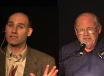
John de Graaf and David Batker: What’s the Economy
For, Anyway? Monday 1/16/12 8-9pm, repeats Wed. at 1pm
Here’s the question no
one has ever bothered to ask about the economy: How can we make it work
for us, instead of the other way around? Local activists John de Graaf
and David Batker, authors of What’s the Economy For, Anyway?
(based on the film of the same name), tackle 13 economic issues,
challenging us to consider the point of our economy and setting forth a
simple goal for any economic system: the greatest good for the greatest
number over the longest run.
See also: Batker’s Earth Economics bio
De Graaf’s page at The Huffington Post
Thanks to Seattle Town Hall
and University Bookstore
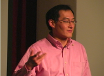
Shi-Ling Hsu:
The Case
for a Carbon Tax,
Monday 1/2/12 8-9pm PST, repeats Wednesday at
1pm
There’s a simple,
straightforward way to cut carbon emissions, says Shi-Ling
Hsu—and we’re rejecting it because of irrational political
fears. Hsu, author of The Case for a Carbon Tax, weighs the
merits of the major approaches to curbing CO2 and concludes that while
a tax is not the perfect (or only) solution, it can be implemented
immediately and paired effectively with other approaches—but
we’ll have to get past our hang-ups if we are to avert a global
crisis.
Thanks to Seattle Town Hall
and Elliott Bay Books